2026-09-10
How Many Times Can You Have Revision Rhinoplasty? Risks of Repeated Surgeries, Scar Tissue, and Actual Recovery Process!
Plastic surgeon Dr. Hyun-woo Kim explains the limits and risks of repeated revision rhinoplasties, the impact of scar tissue, and essential recovery timelines.
Hello.
I am Dr. Hyun-woo Kim from Want Plastic Surgery.
During consultations, there is a question I hear remarkably often.

"Doctor, I've heard people say a nose only looks pretty after you have it done two or three times. Is that true? This might be my third surgery. Will it be okay?"
Since there seems to be a common perception that repeatedly altering the nose is natural,
I'd like to explain why revision rhinoplasty happens,
what risks come with repeated surgeries,
and how many revisions are realistically possible!
Why Does Revision Rhinoplasty Happen?
80 to 90% of revision rhinoplasties occur not because of major complications,
but due to dissatisfaction with the shape and aesthetics.
Rhinoplasty is a procedure where outcomes are difficult to predict 100%.
No matter how meticulously a surgical plan is designed,
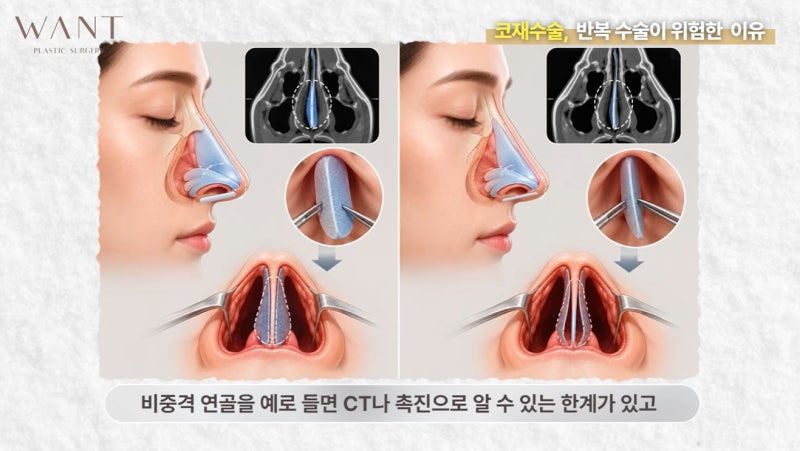
the actual condition of the cartilage used differs for each person.
✅ There is a limit to assessing septal cartilage solely through CT scans or palpation; much can only be confirmed once opened surgically.
✅ If the cartilage is thinner or weaker than anticipated, the nasal tip may not elevate as much, falling short of the desired result.
✅ Subtle discrepancies may also exist between the image envisioned by the patient and what the surgeon understood.
These factors combine and often lead to revision surgery.
The Greatest Risk of Repeated Surgeries: Transformation of Healthy Tissue into 'Scar Tissue'
The biggest issue with repeated nose surgeries is the accumulation of scar tissue (fibrotic tissue).
Scar tissue forms in empty dead spaces after surgery, accumulating more with each additional procedure.
Problems Caused by Excessive Scar Tissue!
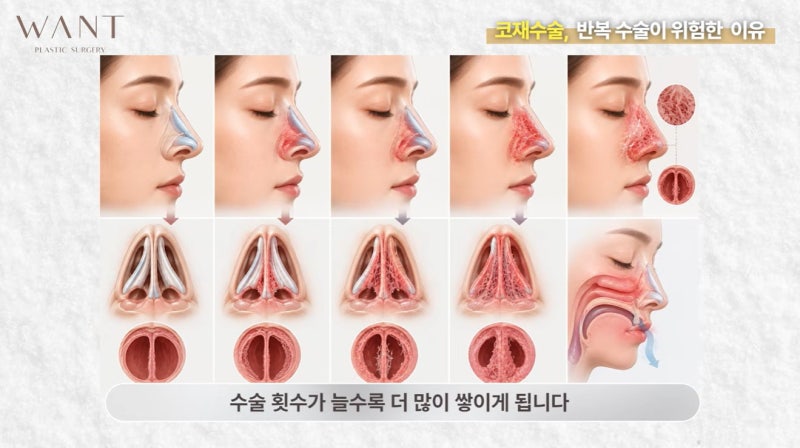
✅ Normal blood circulation is disrupted, worsening the overall blood supply across the nose.
✅ The nose becomes stiff and firm, raising surgical difficulty and making it harder to achieve desired results.
✅ In severe cases, breathing discomfort or functional impairment can occur.
Understanding 'Normal Swelling' Through Actual Recovery Progress
Right after nose surgery, the nose may appear large and bulbous due to swelling, which is a completely normal part of healing.
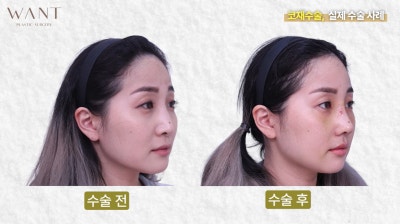
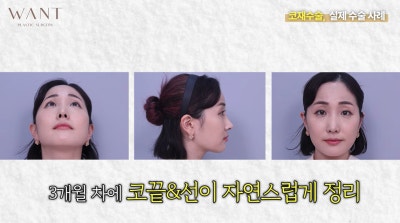
Many patients worry during this early phase, wondering "Did it fail?", but looking at typical recovery timelines:
Timeframe | Progress |
Immediately Post-Op (Week 1) | Nose looks large and blunt due to swelling (Normal) |
Month 1 | 70-80% of swelling subsides; defined contours begin to emerge |
Month 3 | Nasal tip settles naturally, and the overall profile smooths out |
Surgical results should be evaluated only after waiting at least 3 months or more.
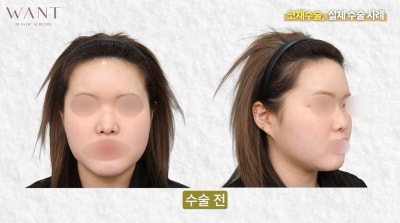
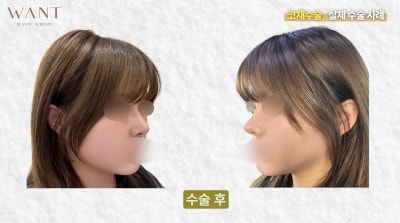
We often see patients visiting because they are unhappy with their tip shape after having surgery elsewhere.
In these cases, evaluating the condition of internal scar tissue comes first.
If at least 8 months have passed since the primary surgery and tissues have stabilized sufficiently, revision surgery can proceed.

Revision Rhinoplasty: How Many Times Can It Be Done?
There is no set number.
Some patients achieve great, satisfying results even on their 5th, 6th, or 8th revision.
Conversely, issues like dissatisfaction or inflammation can happen even during a 2nd surgery.
Because bodily tissues regenerate and heal over time, multiple revisions are theoretically possible as long as tissue normalization has occurred.
However, strict prerequisites must be met.
Prerequisites That Must Be Followed Before Revision Surgery!

✅ Allow an interval of at least 6 months between surgeries.
✅ 1 to 2 months post-op is the period when scar tissue forms most aggressively and the nose is stiffest; intervening at this point worsens results and makes surgery difficult.
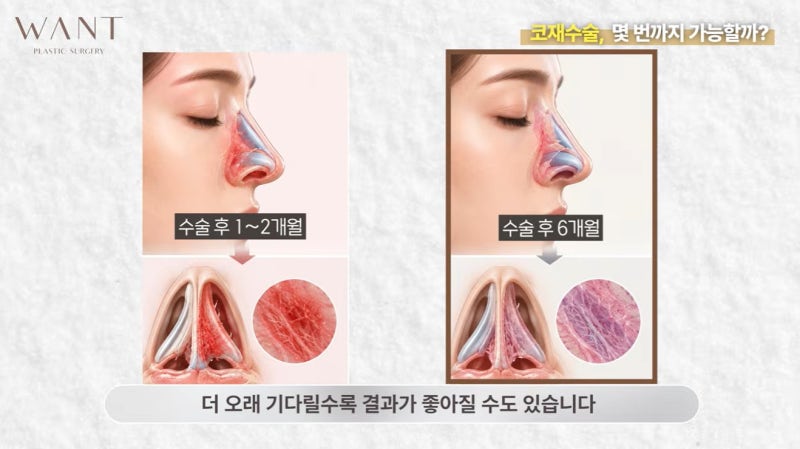
✅ At least 6 months are needed for scar tissue to mature and for tissues to return toward a normal baseline.
✅ Waiting even longer often yields better surgical outcomes.
⚠️Realistic Limitations⚠️
If four or five surgeries have been repeated to the point where the nose has hardened like a rock, it becomes very difficult to expect meaningful surgical improvements. The tissue is already excessively compromised.
The core issue is not which number surgery this is, but rather the current health of your nasal tissues.
If the tissue remains healthy and scar tissue has softened, a revision can produce excellent results;
however, if repeated interventions have left the nose hardened and fibrotic, achieving the desired aesthetic becomes extremely difficult.
Avoid Rushing into a Quick Revision!
Driven by anxiety, many patients rush into revision surgery too soon.
However, during months 1 to 3 post-op, swelling and scar remodeling are still actively underway.
During this stage, patience is critical.
Adjuvant treatments that help tissue recovery (e.g., stem cell therapy) can also be utilized if necessary while waiting.
In conclusion, rhinoplasty does not become prettier the more times it is done; the key is evaluating tissue health and intervening at the optimal timing.
Summary of the Day!
✅ 80-90% of revision rhinoplasties stem from dissatisfaction with appearance!
✅ Repeated operations impair circulation and accumulate scar tissue, increasing surgical difficulty and potentially affecting function.
✅ Recovery results should be judged after at least 3 months of observation.
✅ Revision is strongly advised only after at least 6 months have passed.
✅ Most importantly: thoroughly plan your primary surgery correctly from the start.
If you are considering rhinoplasty or planning a revision,
please avoid making hasty decisions alone and consult deeply with a board-certified plastic surgeon.
Feel free to reach out anytime if you need a consultation appointment.
[KakaoTalk Channel Consultation]
Want Plastic Surgery Clinic
Your Want is Our Want.
pf.kakao.com
[Naver Booking]
https://m.booking.naver.com/booking/13/bizes/1450109?theme=place&lang=ko&area=ple
[Official Instagram]
Individual surgical outcomes may vary, and complications such as bleeding and infection may occur.
Frequently Asked Questions
How many times can revision rhinoplasty be performed?
There is no strict numerical limit, as feasibility depends on the health of your nasal tissues. If the tissue has returned to normal and scar tissue has softened, multiple revisions may be possible; however, if tissues have hardened like stone from repeated surgeries, further interventions are unlikely to produce good results.
What risks arise from repeated rhinoplasties?
Excessive scar tissue (fibrosis) builds up, causing tissue hardening and poor blood circulation. This drastically elevates surgical difficulty, compromises aesthetic outcomes, and in severe situations, may lead to breathing issues and functional impairment.
When is it safe to undergo revision rhinoplasty?
It is generally recommended to wait at least 6 months after your previous surgery. During the first 1 to 2 months, scar tissue is actively forming and tissues remain stiff. Waiting 6 months or longer allows scar tissue to mature and the nasal envelope to soften for a safer, more predictable outcome.
I dislike my nose shape shortly after surgery. Should I get a revision right away?
No. Early post-operative swelling can make the nose appear broad, thick, or asymmetric, so you should monitor the healing process for at least 3 months. Around 70 to 80% of swelling resolves by the first month, and contours settle significantly by the third month, meaning early revisions should be avoided.
What is the most common reason people choose revision rhinoplasty?
Around 80 to 90% of revision cases are driven by aesthetic dissatisfaction rather than major medical complications. Factors such as individual cartilage thickness and anatomical differences, as well as subtle communication gaps between patient and surgeon, can result in outcomes that do not match expectations.